CHENLU-Technikteam | Aktualisiert im Oktober 2026
Kurzantwort: Choose carbon steel for the lowest purchase price and easiest repair, typical for diesel and gasoline on rough roads. Choose Aluminium when a lighter tank lets you carry more fuel within your weight limit and the extra cost pays back in payload. Choose stainless steel for corrosive chemicals and food-grade liquids, where the cargo must not react with the tank.
Comparison at a glance
|
Kohlenstoffstahl |
Aluminium |
Edelstahl |
| Tank weight (tare) |
Heaviest |
Lightest |
Between the two, depending on design |
| Payload under a fixed weight limit |
Am geringsten |
Highest |
Medium |
| Corrosion resistance |
Needs coating and paint |
Good for fuels; forms its own oxide layer |
Best, including many chemicals |
| Repair |
Easiest; standard steel welding |
Needs aluminum welding skills |
Needs stainless welding skills |
| Kaufpreis |
Am geringsten |
Höher |
Highest |
| Typical cargo |
Diesel, gasoline, heavy fuel |
Gasoline, diesel, jet fuel where payload matters |
Chemicals, edible oil, food-grade liquids |
General engineering comparison. Exact weights depend on tank size, plate thickness and design.
Why tank weight matters
Road law limits the total weight of the truck, trailer and cargo. Every kilogram saved in the tank can become cargo. Aluminum is roughly one-third the density of steel, so even with thicker plates an aluminum tank is usually noticeably lighter. On routes with strict weight limits and frequent trips, the extra fuel carried each trip can cover the higher purchase price over time. On routes where trucks are rarely loaded to the limit, the saving is smaller.
Carbon steel tankers
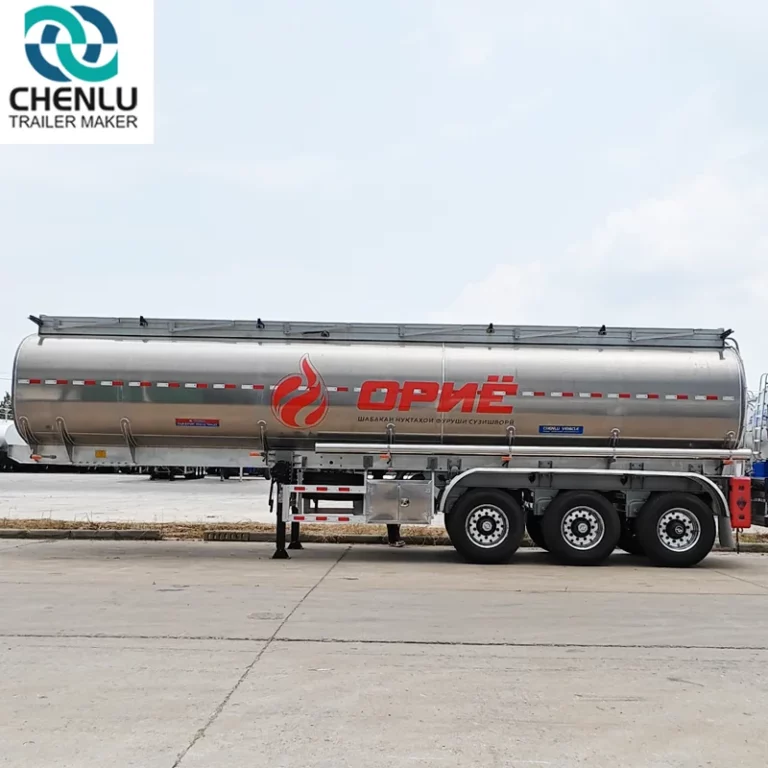
CHENLU fuel tankers use 5 mm or 6 mm Q235 carbon steel for the tank body and end plates, with sandblasting, an anticorrosive primer and two finish coats on the chassis. Carbon steel is tolerant of rough roads, cheap to repair at any workshop, and the most economical choice for diesel and gasoline. A 50,000 litre five-compartment tanker for Congo used 5 mm Q235 carbon steel.
Aluminum tankers
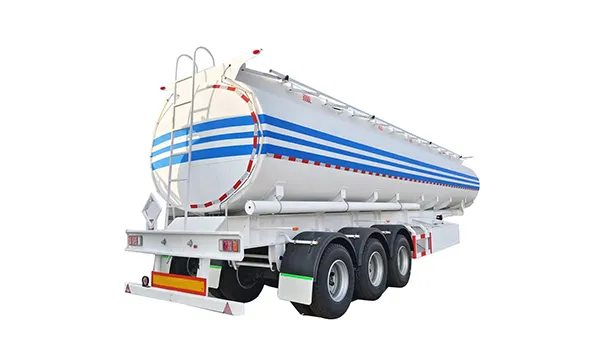
Aluminum tankers are lighter and resist corrosion from fuels, which suits fleets that run many loaded trips. CHENLU has completed aluminum tank semi-trailers for African customers and offers a 40,000 litre multi-compartment tanker with optional insulation, vapor recovery and a pump unit. Confirm the tank material for your order at inquiry. Plan for repairs: aluminum needs welders trained for it.
Stainless steel tankers
Stainless steel resists a wide range of chemicals and can be polished smooth for easy cleaning, which suits chemicals, edible oils and food-grade liquids. It is the most expensive option and is usually chosen for the cargo, not for payload. CHENLU builds stainless steel tankers to order; tell us the exact cargo so we can confirm compatibility.
How to choose
- Start with the cargo: fuels can use any of the three; corrosive chemicals and food-grade liquids point to stainless steel.
- Check your weight limit: if trucks run full to the legal limit, aluminum’s lighter tare carries more each trip.
- Count your trips: more loaded trips per year mean faster payback on aluminum.
- Look at your workshops: where only steel welding is available, carbon steel is easier to keep running.
- Compare total cost: purchase price, payload gained, repairs and resale value.
Tank material FAQ
Is an aluminum tanker better than a steel tanker?
Not always. Aluminum is lighter and carries more payload under a fixed weight limit, but costs more and needs specialized repair. Carbon steel is cheaper and easier to repair.
Which tanker material is best for diesel?
Carbon steel and aluminum both suit diesel. Carbon steel is the economical choice; aluminum makes sense when payload per trip matters most.
When do I need a stainless steel tanker?
For corrosive chemicals, edible oils and food-grade liquids, where the cargo must not react with or be contaminated by the tank.
What does CHENLU use for fuel tankers?
The standard fuel tanker uses 5 mm or 6 mm Q235 carbon steel. Aluminum and stainless steel tanks are available to order.
Get the right tank for your cargo
See all tanker options on our tanker trailer page, oder send us your cargo, volume and route for a recommendation and factory-direct quote.



 26. Oktober 2026