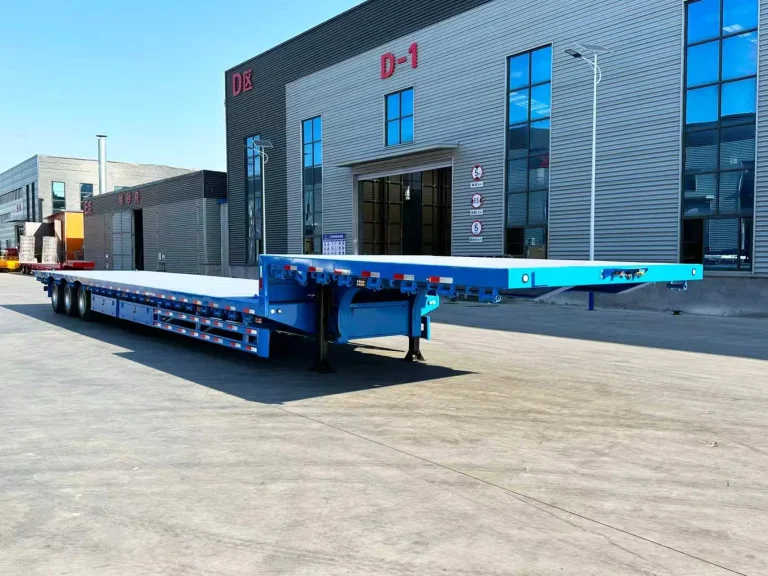
Viele Käufer machen Verluste, weil sie sich für den falschen Anhänger entscheiden. Die Ladung passt möglicherweise nicht hinein, Genehmigungen verzögern sich oder das Beladen dauert zu lange. Ein Pritschenanhänger löst viele Probleme beim Transport offener Ladungen, wenn man die Anhängerkonstruktion, die Achsanordnung, die Ladeflächenhöhe und die Transportanforderungen richtig aufeinander abstimmt.
Ein Pritschenauflieger ist ein offener Sattelauflieger, der zum Transport von Fracht eingesetzt wird, die keine geschlossenen Seitenwände oder ein Dach benötigt. Er wird häufig für den Transport von Fracht wie Stahlträgern, Baumaschinen, Maschinen, Rohren, Containern, Bauholz und übergroßer Fracht verwendet. Verschiedene Pritschenauflieger-Typen helfen den Käufern dabei, unterschiedliche Ladungsgrößen, Straßenverkehrsregeln und Baustellenbedingungen zu bewältigen.
Artikel Gliederung
- Was ist ein Tieflader?
- Warum wird im Güterverkehr ein Tieflader eingesetzt?
- Welche Fracht kann ein Tieflader transportieren?
- Welche gängigen Ausführungen von Tiefladern gibt es?
- Wie lauten die Standardabmessungen für Flachbettanhänger?
- Wie unterscheiden sich Flachbettanhänger von Step-Deck-, Tieflader- und Gooseneck-Anhängern?
- Was sollten Käufer über das Be- und Entladen wissen?
- Wie wählen Sie den richtigen Tieflader für Ihr Unternehmen aus?
- Auf welche Qualitätsmerkmale sollte man beim Kauf von Flachbettanhängern achten?
- Warum sollte man mit einem professionellen Hersteller von Sattelaufliegern in China zusammenarbeiten?
- Häufig gestellte Fragen zu Flachbettanhängertypen und zum Gütertransport
- Die wichtigsten Erkenntnisse
Was ist ein Tieflader?
A Tiefladeanhänger ist ein Anhängertyp mit einer langen, offenen Ladefläche. Er verfügt weder über eine feste Karosserie noch über feste Seitenwände oder ein festes Dach und hat keinen geschlossenen Laderaum. Diese einfache Bauweise erleichtert das Be- und Entladen vieler verschiedener Güter von der Seite, von hinten oder von oben.
In der Transportbranche kommen Pritschenfahrzeuge vor allem dann zum Einsatz, wenn die Ladung zu groß, zu schwer, zu breit oder zu unregelmäßig geformt ist, um in einen geschlossenen Anhänger zu passen. Ein Gabelstapler, ein Kran oder eine Verladevorrichtung kann die Ladung direkt auf die Ladefläche heben. Aus diesem Grund ist die Pritschenkonstruktion in den Bereichen Bauwesen, Bergbau, Häfen, Landwirtschaft, Stahltransport und Industrielogistik sehr beliebt.
Als Hersteller von Sattelaufliegern erklären wir es oft so: Wenn die Ladung nicht sicher in einem geschlossenen Kofferauflieger transportiert werden kann, ist ein Pritschenauflieger möglicherweise die bessere Wahl. Er bietet mehr Platz, mehr Flexibilität beim Beladen und eine stabilere Auflagefläche für Schwerlasten.

Was ist ein Tieflader?
Warum wird im Güterverkehr ein Tieflader eingesetzt?
Ein Tieflader wird für Fracht eingesetzt, die einen freien Zugang erfordert. Da er weder Seitenwände noch ein Dach hat, können Arbeiter lange, breite oder hohe Gegenstände verladen, ohne dabei mit Platzbeschränkungen zu kämpfen. Dies ermöglicht ein einfaches Be- und Entladen in Lagerhäusern, Häfen, Fabriken und auf Baustellen.
Der Transport mit Pritschen-Lkw ist auch deshalb sinnvoll, weil mit demselben Anhänger viele verschiedene Frachtarten befördert werden können. An einem Tag werden vielleicht Stahlcoils oder Stahlträger transportiert, am nächsten Tag hingegen Fracht wie Maschinen, Rohre, Holz oder Betonbauteile. Diese Flexibilität hilft Flottenbesitzern, die Auslastung ihrer Anhänger zu verbessern und Leerlaufzeiten zu reduzieren.
Für B2B-Einkäufer liegt der entscheidende Vorteil auf der Hand: Ein Anhänger kann für viele verschiedene Aufgaben eingesetzt werden. Das macht Flachbettfracht praktisch für Logistikunternehmen, Ausrüstungsverleiher, Projektdienstleister und Anhängerhändler.
Welche Fracht kann ein Tieflader transportieren?
Ein Tieflader wird zum Transport vieler offen geladener Güter eingesetzt. Zu den üblichen Ladegütern zählen Baumaterialien, Industriemaschinen, Container, große Rohre, Stahlkonstruktionen, Landmaschinen und Schwermaschinen. In vielen Märkten werden Tieflader auch für den Transport von Gütern eingesetzt, die eine schnelle seitliche Verladung erfordern.
Zu den typischen Frachtgütern gehören:
| Fracht Typ |
Warum Flachbettdrucker gut funktionieren |
| Stahlträger und -rohre |
Lange Fracht kann quer auf dem offenen Deck gelagert werden |
| Baumaschinen |
Die Maschinen können über eine Rampe oder mit einem Kran verladen werden |
| Behälter |
Der robuste Rahmen hält schweren Lasten stand |
| Schnittholz und Platten |
Einfaches Beladen von der Seite oder von oben |
| Industriemaschinen |
Flexible Ladungssicherungspunkte |
| Windkraftanlagenflügel |
Ausziehbare Anhänger bieten Platz für längere Ladungen |
Manche Fracht kann aufgrund von Höhen- oder Breitenbeschränkungen oder aufgrund der Art der Verladung nicht in einem normalen geschlossenen Anhänger transportiert werden. In solchen Fällen bietet ein Pritschenanhänger dem Käufer mehr Flexibilität. Für übergroße oder überbreite Ladungen sind jedoch je nach den örtlichen Vorschriften möglicherweise eine Genehmigung, ein Begleitfahrzeug, ein Routenplan oder eine spezielle Sicherheitskennzeichnung erforderlich.
Welche gängigen Ausführungen von Tiefladern gibt es?
Es gibt nicht nur eine Art von Pritschenanhänger. Unterschiedliche Einsätze erfordern unterschiedliche Konstruktionen. Wenn Käufer verschiedene Arten von Pritschenanhängern vergleichen, sollten sie das Ladegewicht, die Ladungshöhe, die Straßenverhältnisse, die Beladungsmethode und die örtlichen Transportvorschriften berücksichtigen.
Hier sind die gängigsten Ausführungen von Tiefladern:
| Art des Tiefladers |
Am besten geeignet für |
Hauptvorteil |
| Standard-Flachbett |
Stückgut und Container |
Einfach, robust, kostengünstig |
| Aluminium-Pritsche |
Leichtere Fracht und gewichtsempfindliche Transporte |
Geringeres Taragewicht |
| Stufendeck |
Höhere Ladung |
Geringere Deckshöhe |
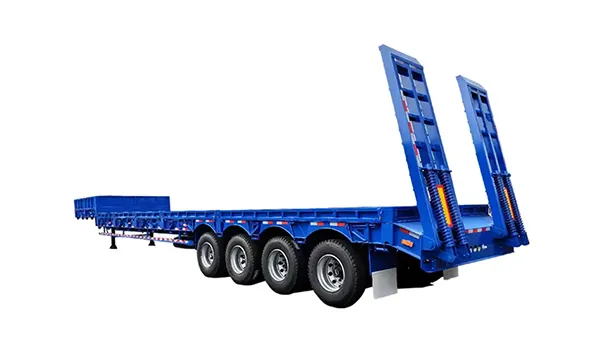
| Tieflader |
Maschinen und überhöhte Fracht |
Mehr Durchfahrtshöhe |
| Ausziehbares Flachbett |
Langstahl, Rohre, Klingen |
Lässt sich in der Länge verlängern |
| Schwanenhals-Anhänger |
Transport von Schwerlastgeräten |
Bessere Lastverteilung |
| RGN-Anhänger |
Schwermaschinen |
Die Front lässt sich zum Beladen über eine Rampe abnehmen |
| Tieflader |
Schwere und hohe Maschinen |
Sehr geringe Ladehöhe |
Der Standard-Flachbettanhänger ist der gängigste Typ in vielen Fuhrparks. Er ist jedoch nicht immer die richtige Wahl für jedes Unternehmen. Ist die Ladung beispielsweise hoch, sind ein Step-Deck- oder ein Drop-Deck-Anhänger möglicherweise besser geeignet. Ist die Ladung sehr schwer, sind Tieflader oder RGN-Optionen unter Umständen sicherer.
Wie lauten die Standardabmessungen für Flachbettanhänger?
Die Abmessungen von Pritschenanhängern hängen vom Modell und Hersteller ab, doch in vielen Märkten kommen Modelle mit einer Länge von 48 Fuß und 53 Fuß zum Einsatz. Ein 53-Fuß-Pritschenanhänger wird häufig für lange Transportstrecken verwendet, während kürzere Modelle für den Nahverkehr, unebene Straßen oder bei besonderen Vorschriften zum Einsatz kommen können.
Zu den typischen Abmessungen von Tiefladern gehören unter anderem:
| Artikel |
Gemeinsamer Bereich |
| Länge |
40 Fuß, 45 Fuß, 48 Fuß oder 53 Fuß lang |
| Breite |
Etwa 8,5 Fuß auf vielen Straßenmärkten |
| Deckhöhe |
Meist etwa 4,5–5 ft, je nach Achs- und Reifenkonfiguration |
| Achskonfiguration |
2-achsig, 3-achsig oder maßgeschneiderte Mehrfachachsenausführung |
| Tragfähigkeit |
Entwickelt unter Berücksichtigung der Markt- und Straßenverkehrsregeln |
Die Abmessungen von Anhängern variieren je nach Land, Straßenverkehrsordnung, Reifengröße, Federung und Ladungsart. Die Abmessungen hängen davon ab, ob der Anhänger für Container, Stahl, Holz, Bergbau oder Schwermaschinen ausgelegt ist. Daher sollten Käufer vor der Bestellung stets die technischen Daten überprüfen.
Bei Spezialtransporten variieren die Abmessungen der Anhänger noch stärker. Einige ausziehbare Modelle können im ausgefahrenen Zustand eine Länge von rund 80 Fuß oder mehr erreichen. Diese eignen sich für lange Ladegüter wie Windradflügel, Brückenteile und Industrieträger. Für längere Anhänger sind jedoch unter Umständen eine Genehmigung und eine sorgfältige Routenplanung erforderlich.
Wie unterscheiden sich Flachbettanhänger von Step-Deck-, Lowboy- und Gooseneck-Anhängern?
Flachbettanhänger, Step-Deck-Anhänger, Tieflader, Sowohl Schwenkhals- als auch Schwanenhalsmodelle gehören zu den Transportlösungen mit offenem Ladeboden, lösen jedoch jeweils unterschiedliche Probleme. Die Wahl des richtigen Tiefladers beginnt damit, die Unterschiede zu kennen.
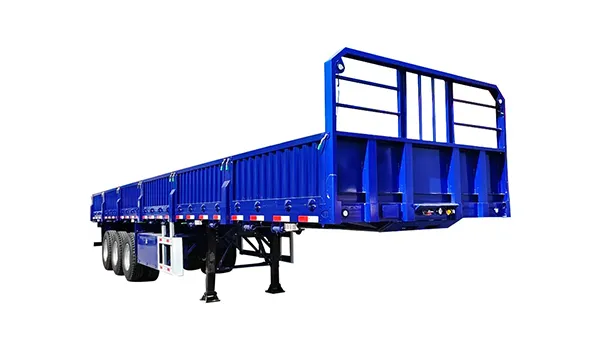
Ein normaler Tieflader verfügt über eine durchgehende Ladefläche, die sich von der Vorderseite bis zum Heck des Anhängers erstreckt. Ein Step-Deck-Anhänger hat eine obere und eine untere Ladefläche, wodurch vor den Hinterachsen eine abgesenkte Ladefläche entsteht. Dies ermöglicht den Transport höherer Ladegüter unter Einhaltung der Höhenbeschränkungen. Ein Lowboy liegt deutlich tiefer und wird hauptsächlich für Baumaschinen und andere schwere Lasten eingesetzt.
A Schwanenhals Das RGN-Modell wird häufig gewählt, wenn das Beladen der Maschinen schwierig ist. Bei einem RGN lässt sich der vordere Teil des Anhängers abkoppeln, wodurch eine Rampe entsteht. So können Maschinen wie Traktoren, Bagger und Lader sicherer auf die Ladefläche fahren.
Einfache Vergleichstabelle:
| Anhängertyp |
Deck-Stil |
Optimale Verwendung |
| Flachbett |
Gerades offenes Deck |
Stückgut |
| Stufendeck |
Zwei Decks |
Höhere Ladung |
| Tieflader |
Unteres Hauptdeck |
Höhenabhängige Lasten |
| Tieflader |
Sehr niedrige Ladefläche |
Schwermaschinen |
| RGN |
Abnehmbarer Hals |
Befahrbare Ausrüstung |
Für internationale Käufer hängt die beste Wahl von den Straßenverhältnissen, der Ladehöhe, den gesetzlichen Ladungsbeschränkungen und den täglichen Arbeitsanforderungen ab. Ein Händler benötigt möglicherweise mehrere Arten von Pritschenfahrzeugen, um verschiedene Größen und Abmessungen in einem Markt bedienen zu können.
Was sollten Käufer über das Be- und Entladen wissen?
Ein wesentlicher Vorteil von Flachbettfahrzeugen ist die einfache Beladung. Die Mitarbeiter können die Ladung von der Seite, von hinten oder von oben verladen. Dadurch eignen sie sich besonders für Orte, an denen nur begrenzte Laderampen zur Verfügung stehen oder an denen große Ladungen mit einem Kran angehoben werden müssen.
Ein Tieflader ermöglicht ein einfaches Beladen mit einem Gabelstapler, einem Kran oder einem Radlader. Bei Stahl, Rohren, Maschinen und Baumaterialien spart dies Zeit. Außerdem verringert sich dadurch der Bedarf an speziellen Lagertoren oder einem Zugang zu geschlossenen Anhängern.
Ein sicheres Laden ist jedoch genauso wichtig wie ein schnelles Laden. Käufer sollten Folgendes überprüfen:
- Decksfestigkeit für konzentriertes Ladungsgewicht
- Konstruktion der Seitenschiene für Verzurrpunkte
- Ladungssicherungssystem für Ketten, Gurte und Schlösser
- Trennwand nach vorne, falls ein Frontschutz erforderlich ist
- Planensystem, falls die Ladung vor Regen oder Staub geschützt werden muss
- Anhänger zur Sicherung von schweren oder unregelmäßigen Gütern
In manchen Fällen bringen Käufer vorne eine Trennwand an. Eine Trennwand soll verhindern, dass die Ladung beim Bremsen nach vorne rutscht. Sie kann die Sicherheit beim Transport von Stahl, Holz, Rohren und anderen langen Materialien erhöhen.
Wie wählen Sie den richtigen Tieflader für Ihr Unternehmen aus?
Bei der Wahl des richtigen Anhängers geht es nicht nur um den Preis. Es geht um die Ladung, die Straßenverhältnisse, gesetzliche Vorschriften und die langfristige Nutzung. Ein günstiger Anhänger, der für den jeweiligen Einsatzzweck nicht geeignet ist, kann später durch Reparaturen, Verzögerungen und Sicherheitsrisiken höhere Kosten verursachen.
Stellen Sie sich bei der Auswahl des richtigen Flachbettes folgende Fragen:
- Welche Fracht werden Sie am häufigsten transportieren?
- Wie hoch ist die maximale Traglast?
- Ist die Ladung lang, breit, hoch oder übergroß?
- Sind die Länge des Anhängers und die Achsanordnung gemäß den örtlichen Vorschriften zulässig?
- Wird der Anhänger auf Autobahnen, in Häfen, in Bergwerken oder auf unebenen Straßen eingesetzt?
- Benötigen Sie eine Plane, Containerschlösser, Seitenwände oder abnehmbare Pfosten?
- Benötigen Sie eine OEM-/ODM-Anpassung?
Als professioneller Hersteller von Sattelaufliegern in China orientieren wir uns in der Regel zunächst an den Transportanforderungen des Käufers. So kann beispielsweise eine Logistikflotte Folgendes benötigen: Flachbett-Sattelauflieger für Container und Schüttgut. Ein Bauunternehmer benötigt möglicherweise eine stärkere Federung, verstärkte Träger und ein hochbelastbares Fahrwerk. Ein Kunde aus dem Bergbau benötigt möglicherweise einen stabileren Rahmen und eine für den Einsatz auf Straßen optimierte Konfiguration.
Deshalb sollte die Wahl des richtigen Tiefladers auf dem tatsächlichen Einsatz basieren und nicht nur auf Katalogfotos.

Wie wählen Sie den richtigen Tieflader für Ihr Unternehmen aus?
Auf welche Qualitätsmerkmale sollte man beim Kauf von Flachbettanhängern achten?
Wenn Käufer nach Anhängern zum Verkauf suchen, vergleichen sie oft zuerst den Preis. Der Preis spielt zwar eine Rolle, aber die Konstruktion ist noch wichtiger. Der Anhänger muss unter realen Einsatzbedingungen stabil bleiben.
Zu den wichtigsten Qualitätsaspekten gehören:
| Qualitätsaspekt |
Warum es wichtig ist |
| Material des Hauptträgers |
Beeinflusst die Tragfähigkeit |
| Schweißqualität |
Beugt Rissen und Rahmenversagen vor |
| Abstand zwischen den Querträgern |
Stärkt die Festigkeit des Decks |
| Achsenmarke und Tragfähigkeit |
Hat Auswirkungen auf Sicherheit und Wartung |
| Art der Aufhängung |
Beeinflusst den Fahrkomfort und die Ladungsstabilität |
| Lackierung und Rostschutzbehandlung |
Verlängert die Lebensdauer |
| Achsschenkelbolzen und Fahrwerk |
Trägt zur Sicherheit beim Ankuppeln und Parken bei |
Bei Pritschenanhängern sollten Käufer außerdem prüfen, ob der Anhänger mit Containerverriegelungen, abnehmbaren Seitenpfosten, verstärkten Ladeflächenplatten, Werkzeugkästen, Reserveradhaltern und speziellen Ladungssicherungsvorrichtungen ausgestattet ist.
Ein guter Hersteller sollte Zeichnungen, technische Daten, Fotos aus der Produktion sowie eine klare Kommunikation bereitstellen. Das Ziel ist es, einen sicheren Transport nach der Auslieferung zu gewährleisten. Ein Anhänger ist nicht nur ein Produkt. Er ist Teil Ihres täglichen Geschäftsbetriebs.
Warum sollte man mit einem professionellen Hersteller von Sattelaufliegern in China zusammenarbeiten?
Die Zusammenarbeit mit einem professionellen Hersteller verschafft Ihnen mehr Kontrolle über Design, Kosten und Lieferung. Wir entwickeln, produzieren, individualisieren und exportieren Sattelauflieger für globale B2B-Kunden, darunter Logistikunternehmen, Bauunternehmen, Bergbauunternehmen, Anhängerhändler und Projektkunden.
Unsere Lösungen für Tieflader eignen sich für die Containerlogistik, den Transport von Schüttgut, den Maschinentransport, die Hafenlogistik, den Schwerlastbetrieb sowie Infrastrukturprojekte. Wir können Achskonfiguration, Federung, Ladeflächenkonstruktion, Seitengeländer, Containerverriegelungen, Rampen, Werkzeugkästen, Lackierung und Branding individuell an Ihren lokalen Markt anpassen.
Für Importeure und Flottenbetreiber bietet die Belieferung direkt ab Werk klare Vorteile:
- Flexiblere OEM-/ODM-Anpassungen
- Bessere Kontrolle über Schweißarbeiten und Qualitätsprüfungen
- Wettbewerbsfähige Preise dank direkter Fertigung
- Zuverlässige Lieferung bei Flottenaufträgen
- Technische Unterstützung vor der Produktion
- Unterstützung bei der Exportverpackung und beim Versand
- Langfristige Zusammenarbeit bei Ersatzteilen und Nachbestellungen
Unserer Erfahrung nach legen Käufer nicht nur Wert auf einen niedrigen Preis. Sie wollen einen Anhänger, der jeden Tag zuverlässig funktioniert, Fracht sicher transportiert und das Wachstum ihres Unternehmens unterstützt. Darin liegt der wahre Wert eines vertrauenswürdigen Anbieters von Sattelaufliegern.

Warum sollte man mit einem professionellen Hersteller von Sattelaufliegern in China zusammenarbeiten?
Fallstudie: Auswahl geeigneter Pritschenfahrzeuge für einen Baufahrzeugpark
Ein Baufahrzeugpark benötigte Anhänger, um Stahlkonstruktionen, Maschinen und lange Baumaterialien zwischen den Baustellen zu transportieren. Zunächst wollte der Käufer nur ein einfaches Pritschenmodell. Nach Durchsicht der Ladungsliste stellten wir fest, dass einige Ausrüstungsgegenstände für eine normale Ladefläche zu hoch waren.
Wir haben eine gemischte Lösung vorgeschlagen:
- Standard-Flachbettmodelle für Stahl und Stückgut
- Stufenplattformmodelle für höhere Maschinen
- Anhänger mit verstärkter Ladefläche für eine hohe Gewichtskonzentration der Ausrüstung
- Zusätzliche Verzurrpunkte für eine bessere Ladungssicherung
- Optionale, abnehmbare Stützen für unterschiedliche Ladungsformen
Dadurch konnte der Käufer mehr Transportaufträge mit weniger Verzögerungen abwickeln. Zudem wurde das Risiko verringert, einen Anhängertyp zu kaufen, der nicht alle Anforderungen des Projekts erfüllen konnte.
Tipp für Käufer: Der beste Anhänger ist nicht immer das gängigste Modell. Es ist derjenige, der zu Ihren täglichen Transporten, den Straßenverkehrsregeln und Ihrem Verladevorgang passt.
Häufig gestellte Fragen zu den verschiedenen Arten von Tiefladern und zum Gütertransport
Was ist der Hauptzweck eines Tiefladers?
Der Hauptzweck eines Pritschenanhängers besteht darin, Fracht zu transportieren, die nicht gut in einen geschlossenen Anhänger passt. Er wird zum Transport von Fracht wie Stahl, Rohren, Containern, Maschinen, Bauholz und Baumaterialien verwendet.
Was ist der gängigste Typ eines Tiefladers?
Der gängigste Typ ist der Standard-Flachbettanhänger. Er verfügt über eine gerade, offene Ladefläche und wird häufig für allgemeine Fracht, den Containertransport, Stahlprodukte und Industriegüter eingesetzt.
Was ist der Unterschied zwischen Flachbett- und Step-Deck-Anhängern?
Ein Pritschenanhänger verfügt über eine ebene Ladefläche. Ein Step-Deck-Anhänger hat zwei Absätze bzw. zwei Ladeebenen, wodurch mehr Durchfahrtshöhe für höhere Ladegüter zur Verfügung steht. Step-Deck-Anhänger sind nützlich, wenn die Ladung für einen normalen Pritschenanhänger zu hoch ist.
Kann ein Tieflader übergroße Fracht transportieren?
Ja, ein Tieflader kann übergroße Fracht befördern, allerdings sind für die Ladung unter Umständen Sondergenehmigungen, Warnschilder, Begleitfahrzeuge oder eine Routengenehmigung erforderlich. Käufer sollten vor dem Transport die örtlichen Straßenverkehrsvorschriften prüfen.
Wie lauten die typischen Abmessungen eines Tiefladers?
Typische Abmessungen von Tiefladern liegen häufig bei Längen von 40, 45, 48 oder 53 Fuß. Die Breite beträgt in vielen Märkten oft etwa 8,5 Fuß. Die Abmessungen der Anhänger variieren jedoch je nach Land, Modell, Achsanordnung und Hersteller.
Wie finde ich den richtigen Tieflader?
Berücksichtigen Sie zunächst die Größe und das Gewicht Ihrer Ladung, die Straßenverhältnisse, die Beladungsart sowie die gesetzlichen Vorschriften. Wählen Sie anschließend die Karosserie, die Ladeflächenhöhe, die Achsanordnung, die Federung und das Ladungssicherungssystem, die zu Ihren täglichen Arbeitsabläufen passen.
Wichtige Punkte, die man beachten sollte
- Ein Tieflader ist ein offener Anhänger, der für Fracht eingesetzt wird, die eine flexible Verladung erfordert.
- Flachbettfahrzeuge finden breite Anwendung im Bauwesen, in der Logistik, in Häfen, im Bergbau, beim Stahltransport und bei Industrieprojekten.
- Zu den üblichen Frachtgütern zählen Stahlträger, Rohre, Container, Holz, Maschinen und Schwermaschinen.
- Zu den verschiedenen Arten von Pritschenfahrzeugen zählen Standard-Pritschenfahrzeuge, Aluminium-Pritschenfahrzeuge, Step-Deck-Fahrzeuge, Drop-Deck-Fahrzeuge, Tieflader, Gooseneck-Fahrzeuge, RGN-Fahrzeuge sowie ausziehbare Modelle.
- Die Abmessungen von Tiefladern hängen vom Modell, vom Hersteller, von den örtlichen Straßenverkehrsvorschriften und von der Art der Ladung ab.
- Bei der Auswahl des richtigen Tiefladers müssen das Gewicht, die Höhe und die Länge der Ladung, die Beladungsart, die Achsanordnung sowie die Straßenverhältnisse berücksichtigt werden.
- Qualitätsmerkmale wie Schweißnähte, Festigkeit des Hauptträgers, Federung, Achsenmarke, Aufbaukonstruktion und Lackierung beeinflussen die Lebensdauer des Anhängers.
- Ein professioneller Hersteller von Sattelaufliegern bietet OEM-/ODM-Anpassungen, Direktlieferung ab Werk, zuverlässige Lieferungen und eine langfristige Zusammenarbeit.



 17. Juni 2026